This guide explains what mobula rays are, why they come to the Sea of Cortez, when they are typically around, and how we approach encounters responsibly. Mobula sightings are never guaranteed — they are wild animals, and their presence changes with the season and the conditions.
What are mobula rays?
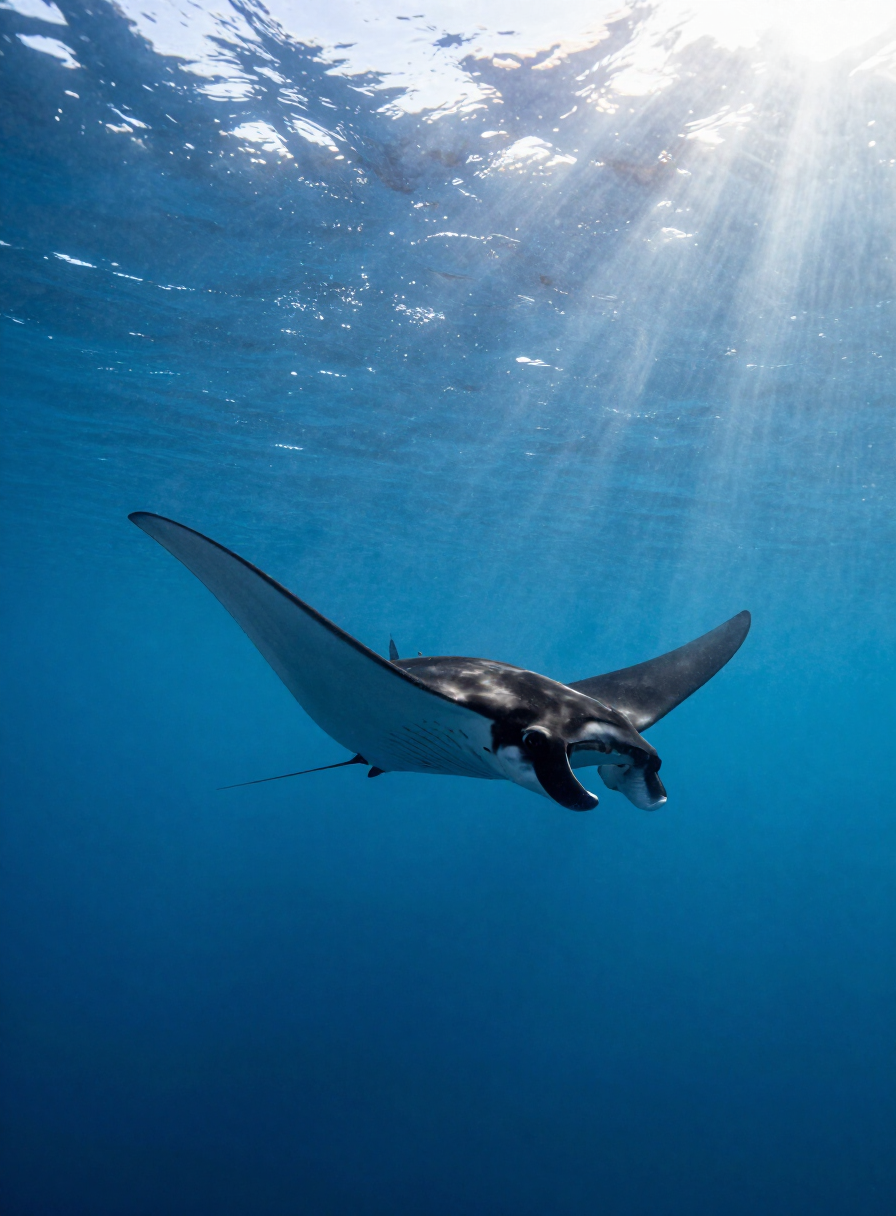
Mobula rays are a group of ray species closely related to manta rays. They are smaller than giant mantas but share the same graceful, “flying” swimming style. In the Sea of Cortez they are known for gathering in numbers and for their spectacular breaching behavior.
Why they aggregate
Mobula rays gather in the Sea of Cortez to feed and interact, drawn by the nutrient-rich water and the seasonal abundance of plankton and small fish. When conditions are right, they can form large aggregations — one of the wildlife events the region is known for.
Seasonal nature
Mobula rays are a warm-water species, so they are more likely to be seen from late spring through fall, when the water temperature is higher. The exact timing shifts with the seasons and the conditions, and they are not present in the same numbers all year. For the broader wildlife picture, see our Sea of Cortez marine life guide.
Responsible encounters
When we encounter mobula rays we observe calmly and respectfully. Chasing or crowding the animals can disrupt their natural behavior, so we let them set the pace. The goal is to share the water with them on their terms, not to force an encounter.
Snorkeling considerations
Swimming with mobula rays is a snorkeling experience — you stay on the surface with mask, fins and vest, and watch them glide below. It helps to be comfortable in open water and to enter quietly. Our Blue Water Snorkeling and Snorkeling Adventure are the experiences where open-water wildlife encounters are possible.
Sea of Cortez and San José del Cabo
The Sea of Cortez off San José del Cabo is one of the recognized areas for mobula ray activity. Departing from Puerto Los Cabos puts us in a good position to reach the open water where they are found — though, as always, where we go depends on the conditions on the day.
Mobula sightings are never guaranteed. They are wild animals whose presence changes with the season, the water temperature and the conditions. Every trip is an opportunity, not a promise.
Where mobula encounters are possible
Ocean Safari — open-water wildlife and snorkeling.
Snorkeling Adventure — reef and open-water snorkel.
Sea of Cortez Marine Life guide — the wider wildlife picture.
Frequently asked questions
Mobula Ray Season in Los Cabos FAQs
Ready to get out on the water?
Book direct with Open Water Expeditions. Cancellations 72 hours or more in advance: 90% refund. Cancellations less than 72 hours in advance: non-refundable.