This guide covers the snorkeling areas we visit, what makes each one distinct, and what to know before you get in the water. Specific animals are never guaranteed, and the spot we snorkel on any given day depends on ocean conditions.
Where to snorkel in San José del Cabo
Open Water Expeditions visits a handful of reef and bay areas north of Puerto Los Cabos. Here are the snorkeling spots we use:
Zacatitos
A remote bay on the East Cape side of the coastline, Zacatitos offers clear water and a sense of being away from it all. Because it is farther along the coast, it is often quieter than the spots closer to the marina.
Los Corales
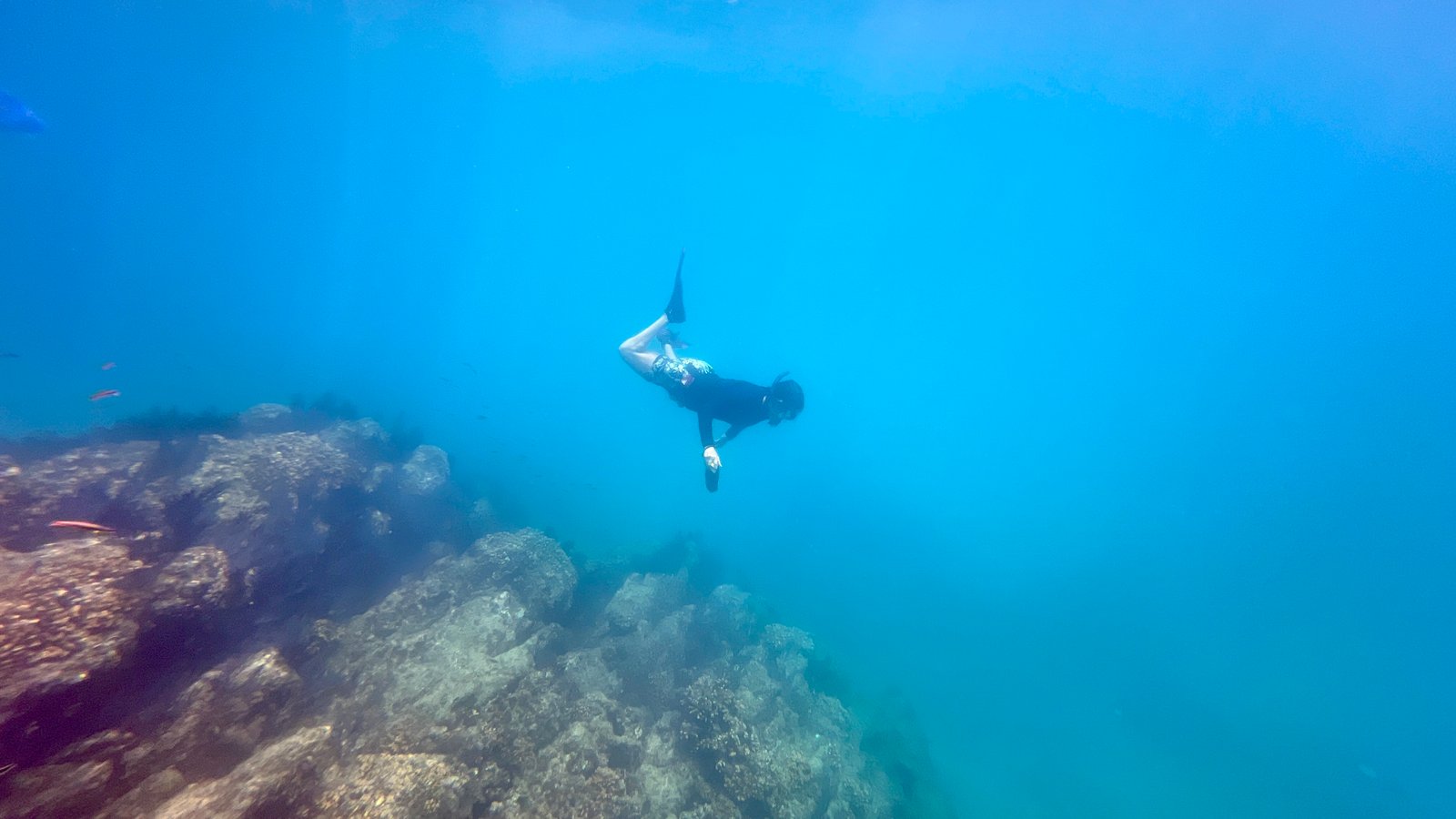
A shallow coral area that holds tropical fish and colorful reef life. Its protected nature makes it a good choice for snorkelers who want calm water and plenty to see just below the surface.
Las Palmitas
A sheltered bay with gentle conditions, Las Palmitas is well suited to beginners and families. The reef life here is typical of the Sea of Cortez — small colorful fish, occasional rays and the chance of a sea turtle passing through.
La Bufadora
Named for the blowhole in the area, La Bufadora combines dramatic coastline with a snorkel stop. The rock structure and currents can bring in a different mix of marine life than the calmer bays.
Barco Hundido
A sunken wreck site that attracts fish and makes for an interesting snorkel. The structure of the wreck draws marine life and gives snorkelers something distinctive to explore.
Reef characteristics
The reefs off San José del Cabo are shallow and sheltered compared with open-ocean sites. That means good light, warm water and the chance to see reef fish, rays and sea turtles without a deep descent. Conditions vary by spot and by day.
Marine life possibilities
Snorkelers commonly see tropical reef fish, and may encounter rays, sea turtles and other pelagic visitors. What is present changes with the season, the water temperature and the currents — we never guarantee specific animals. For a broader look at what lives in these waters, read our Sea of Cortez marine life guide.
Morning conditions
Mornings usually offer the calmest wind and the best visibility, which is why our snorkeling tours favor early departures. By afternoon the breeze can pick up and stir up the surface.
Snorkeling from a boat
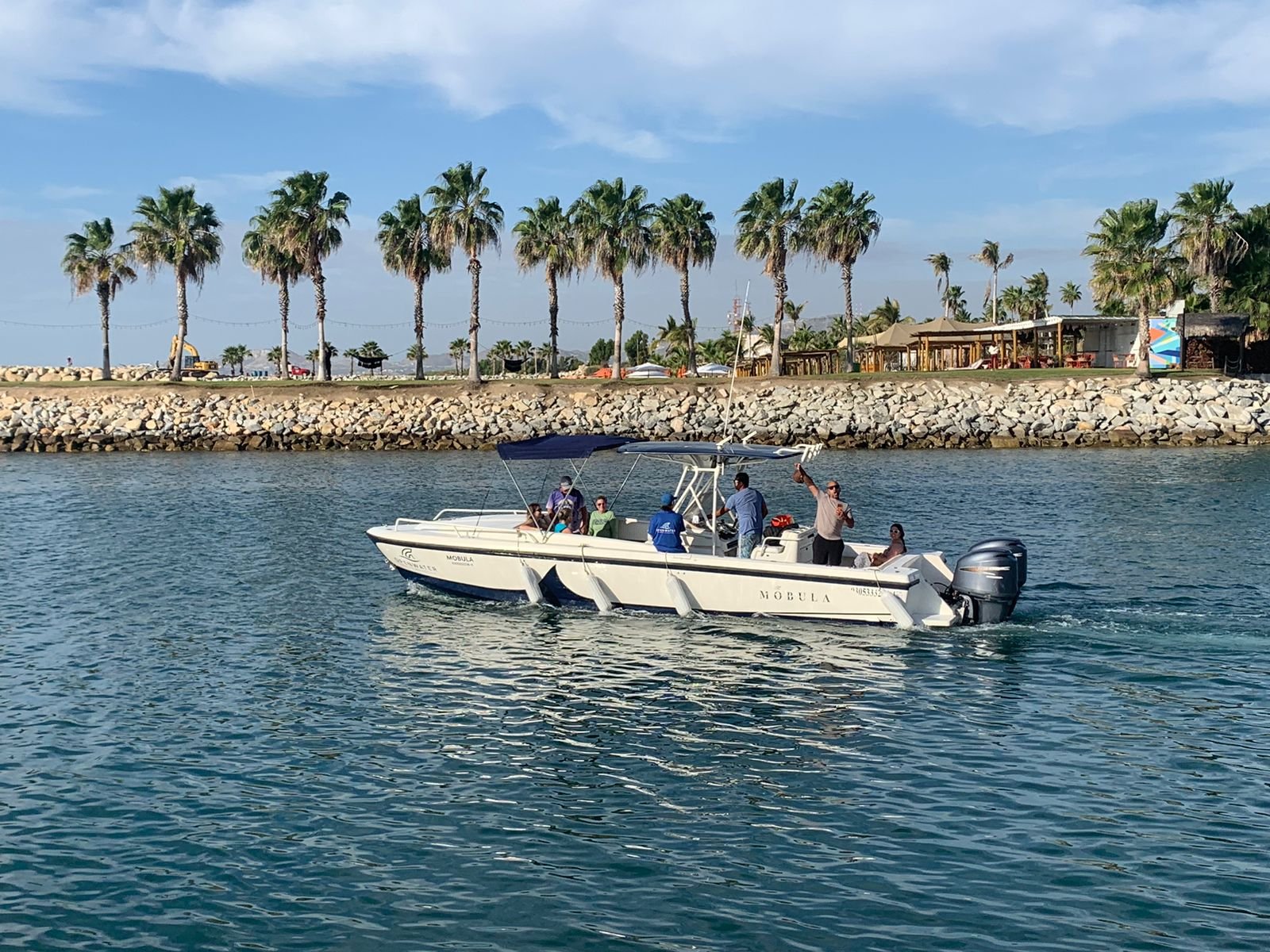
Snorkeling from a boat lets us reach the better spots and move if conditions change. You step off the boat directly onto the reef, rather than wading in from a beach. Our Snorkeling Adventure and [[tour:snorkelingPrivado|Private Snorkeling]] tours both work this way.
Beginner and family considerations
Most of our snorkel spots are beginner-friendly, with shallow water and gentle conditions. We carry flotation vests and premium mask and fins, and the crew helps first-timers get comfortable before getting in.
Flotation and support
Flotation vests are available for anyone who wants extra confidence in the water, and the guide stays with the group. If you are nervous about snorkeling, let the crew know — that is exactly what we help with.
Why locations can change
Ocean conditions decide where we snorkel on the day. Wind, swell and visibility can make one spot better than another, so the captain chooses the best option that morning. The areas above are the ones we use — not a fixed itinerary for every trip.
Specific animals are never guaranteed, and snorkel locations can change according to ocean conditions. Every trip is shaped by the weather and the water on the day.
Book a snorkeling experience
Snorkeling San Jose del Cabo — our shared snorkeling tour.
[[tour:snorkelingPrivado|Private Snorkeling]] — the boat for your group.
Blue Water Snorkeling — a faster-paced adventure with a snorkel stop.
Frequently asked questions
Best Snorkeling in San Jose del Cabo FAQs
Ready to get out on the water?
Book direct with Open Water Expeditions. Cancellations 72 hours or more in advance: 90% refund. Cancellations less than 72 hours in advance: non-refundable.